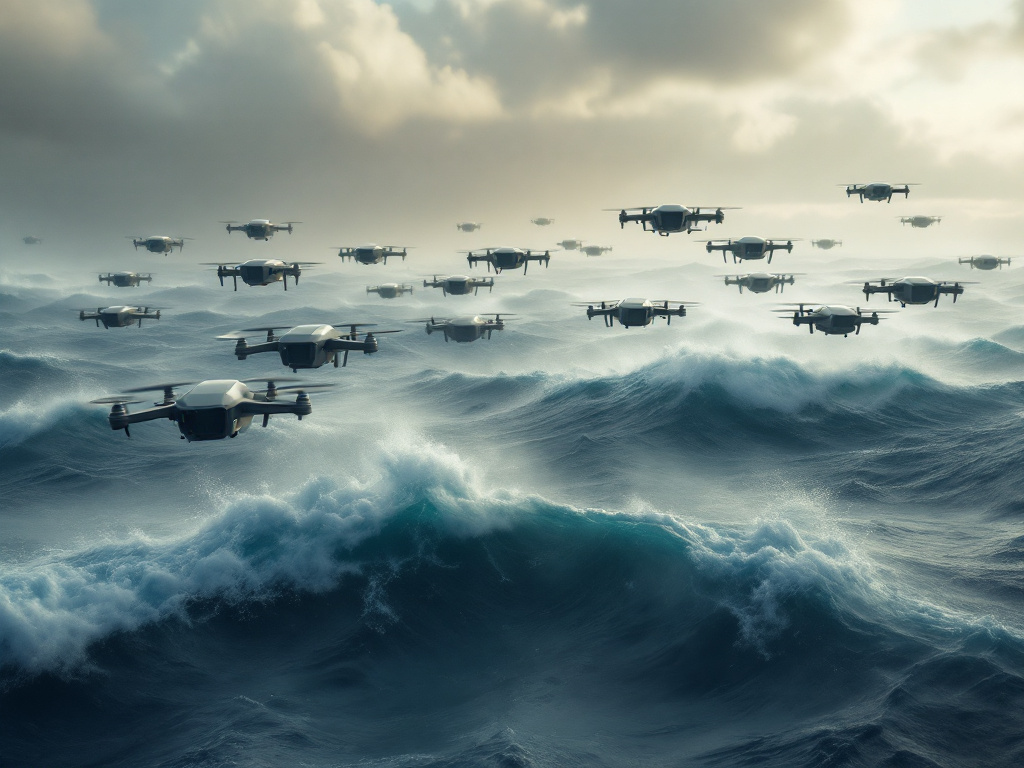
Drone swarm technology represents a cutting-edge advancement in the field of unmanned aerial systems (UAS). This technology involves the coordinated operation of multiple drones, working together to achieve complex missions. The potential applications of drone swarms are vast, ranging from surveillance and reconnaissance to search and rescue operations, and even offensive military strategies.
This technology is significantly transforming modern warfare, particularly in several ongoing conflicts. This technology involves the coordinated operation of multiple drones, which work together to achieve complex missions, and its impact on the battlefield is profound. The Ukraine-Russia conflict, for example, has become a testing ground for drone swarm technology, driving innovations in autonomous warfare that have not been seen on other battlefields. Ukraine has been at the forefront of developing and deploying drone swarms, which are expected to play a crucial role in the conflict. These swarms are designed to operate autonomously, coordinating their actions to overwhelm enemy defenses and execute missions more effectively than individual drones could achieve alone.
Current State of Drone Swarm Technology
- Autonomy and Coordination: Modern drone swarms are characterized by their high level of autonomy. Each drone in the swarm can operate independently while coordinating with others to achieve a common objective. This is made possible through advanced algorithms and artificial intelligence, which enable real-time decision-making and adaptation to changing environments in a centralized or decentralized manner.
- Communication and Networking: Effective communication is crucial for the success of drone swarms. Drones within a swarm communicate with each other and with a central control system using advanced networking protocols. This ensures that the swarm can operate as a cohesive unit, sharing data and adjusting strategies in real-time.
- Applications in Modern Warfare: In the military domain, drone swarms are being explored for various applications, including:
- Surveillance and Reconnaissance: Swarms can cover large areas quickly and efficiently, providing real-time intelligence that significantly enhances situational awareness for military operations, disaster response, or environmental monitoring. Their ability to gather data from multiple angles makes them invaluable in assessing threats and opportunities in various fields.
- Target Engagement: Swarms can be used to overwhelm enemy defenses by saturating an area with multiple, coordinated attacks, leveraging the sheer volume and unpredictability of their movements to create confusion and disrupt enemy operations effectively.
- Logistics and Support: Drones can be used to deliver essential supplies, conduct crucial repairs, or provide reliable communication relays in contested environments, enhancing operational efficiency and effectiveness in various scenarios.
Current Applications and Impact
- Enhanced Capabilities: Drone swarms are being used for a variety of missions, including surveillance, reconnaissance, and targeted strikes. Ukraine has developed AI-driven drone swarms capable of coordinated attacks on enemy tanks and intelligence gathering, potentially giving them a significant advantage in the conflict. These swarms can operate in a “kill box”—an area containing only enemy targets—where they can function independently, reducing the risk to human operators.
- Global Implications: The use of drone swarms in current conflicts is not only changing the dynamics of this specific conflict but also influencing how future wars will be waged. The lessons learned from the deployment of drone swarms in Eastern Europe are being closely watched by military forces around the world, including the United States and China, who are investing in similar technologies.
Key enabling software
Innovative software is crucial for enabling the coordination and operation of drone swarms, allowing them to perform complex missions autonomously or with minimal human intervention. Here are some key types of software and technologies that are essential for drone swarms:
- Autonomous Collaborative Teaming (ACT) Software: This type of software is designed to manage and coordinate the actions of large numbers of drones across multiple domains. It allows drones to work together seamlessly, adapting to changing conditions and mission requirements. Companies like Thales, Anduril Industries, Helsing, L3Harris Technologies, and Swarm Aero are developing such software to control massive drone swarms as part of initiatives like the Replicator program.
- Swarm Management Frameworks: These frameworks provide the necessary tools for managing drone swarms, including flight path management, payload control, and real-time coordination. Examples include Drone Show Software, which allows for the creation and execution of drone light shows, and Skybrush, an open-source drone show and swarm management framework.
- AI and Algorithm-Driven Coordination: Drone swarms rely on advanced algorithms and artificial intelligence to coordinate their movements and tasks with minimal human intervention. This technology enables drones to perform missions cooperatively, such as fighting wildfires, detecting crop diseases, or conducting surveillance and reconnaissance.
- Communication Protocols: Effective communication among drones in a swarm is essential for their coordinated operation. Protocols like FlockWave, developed by CollMot, cover all control and monitoring tasks required for general drone swarm operations, ensuring that drones can communicate and collaborate effectively.
- Simulation and Training Software: Software solutions like SPATMOS Sync Simulator are used to manage and verify drone swarm activities, providing a platform for testing and training before real-world deployment. These simulators help ensure that drone swarms can operate safely and effectively in various scenarios.
These software technologies are critical for the development and deployment of drone swarms, enabling them to perform complex tasks autonomously and efficiently in a variety of applications, from military operations to civilian uses like agriculture and disaster response.
Current limitations to the Drone Swarms technology
However, while promising, the technology faces several limitations that need to be addressed for broader and more effective deployment. Here are some of the current limitations:
- Autonomy and Coordination:
- Complexity in Coordination: Coordinating large numbers of drones to work together seamlessly is a complex task. Ensuring that drones can communicate effectively and make coordinated decisions in real-time is challenging, especially in dynamic and unpredictable environments.
- Limited AI Capabilities: While AI is integral to drone swarms, current systems often struggle with fully autonomous decision-making, especially in scenarios requiring complex judgments or adaptation to unforeseen circumstances.
- Communication and Connectivity:
- Reliable Communication: Maintaining reliable communication between drones and with a central control system is crucial. Interference, jamming, or loss of signal (especially in a GPS-denied environment) can disrupt the swarm’s operation, making it vulnerable to failures or attacks.
- Bandwidth and Latency: High bandwidth and low latency are necessary for real-time data exchange and decision-making. Limited bandwidth or high latency can impede the swarm’s effectiveness, particularly in fast-paced or data-intensive operations.
- Regulatory and Safety Concerns:
- Regulatory Hurdles: The use of drone swarms is subject to regulatory constraints, which can vary widely across different regions. Ensuring compliance with aviation regulations and safety standards is essential but can be complex and time-consuming.
- Safety Risks: The operation of drone swarms poses potential safety risks, including collisions with other aircraft or obstacles, and malfunctions that could lead to crashes. Ensuring the safety of both the drones and the environment in which they operate is a significant challenge.
- Cybersecurity Vulnerabilities:
- Hacking and Cyber Attacks: Drone swarms are susceptible to cyber attacks, which could compromise their operation or lead to unauthorized control. Ensuring robust cybersecurity measures is critical to protect against hacking and data breaches.
- Data Security: The data transmitted and collected by drone swarms must be protected from interception and tampering. Ensuring data security is essential, especially in sensitive or military applications.
- Technological and Operational Limitations:
- Battery Life and Endurance: The operational duration of drones is often limited by battery life. Extending the endurance of drones without significantly increasing their weight or cost is a ongoing challenge.
- Payload and Capability Constraints: The payload capacity of individual drones can limit the types of missions they can perform. Balancing payload capacity with the need for small, agile drones is a key consideration in swarm design.
- Environmental Factors:
- Weather Conditions: Adverse weather conditions, such as strong winds, rain, or extreme temperatures, can affect the performance and reliability of drone swarms. Ensuring that drones can operate effectively under various environmental conditions is essential for their widespread use.
Addressing these limitations requires ongoing research and development in areas such as AI, communication technologies, cybersecurity, and materials science. As these challenges are overcome, drone swarm technologies are expected to become more capable and integrated into a wider range of applications.
The Future of Drone Swarm Technology
- Enhanced AI and Machine Learning: The future of drone swarms lies in the continued development of AI and machine learning technologies. As these technologies advance, drones will become more capable of making independent decisions, adapting to unforeseen circumstances, and learning from their experiences.
- Integration with Other Technologies: Drone swarms will increasingly be integrated with other emerging technologies, such as satellite communications, cybersecurity measures, and advanced sensor systems. This integration will enhance the capabilities and resilience of drone swarms in complex and contested environments.
- Ethical and Legal Considerations: As drone swarm technology advances, it will be essential to address ethical and legal considerations. This includes ensuring that the use of drone swarms complies with international laws and norms, and addressing concerns related to privacy, autonomy, and accountability.
Conclusion
Drone swarm technology represents a significant leap forward in the capabilities of unmanned aerial systems. As this technology continues to evolve at an unprecedented pace, it has the potential to revolutionize modern warfare, providing new opportunities and challenges for military forces around the world. By enabling multiple drones to operate in unison, swarm technology enhances mission effectiveness and operational efficiency, allowing for more sophisticated surveillance, reconnaissance, and combat operations. Furthermore, the deployment of drone swarms can mitigate risks to human personnel and reduce the collateral damage often associated with traditional military tactics.
However, with these advancements come critical ethical and legal considerations that must be thoroughly examined. Questions surrounding autonomy, accountability, and the impact on civilian populations must be addressed to ensure responsible deployment of this technology. By embracing the potential of drone swarms while navigating these complex challenges, we can harness this transformative technology for the benefit of society and global security, paving the way for innovative applications beyond military use, such as disaster response and environmental monitoring.

 IAORA42
Leave a comment