Category: Science & Technology
-
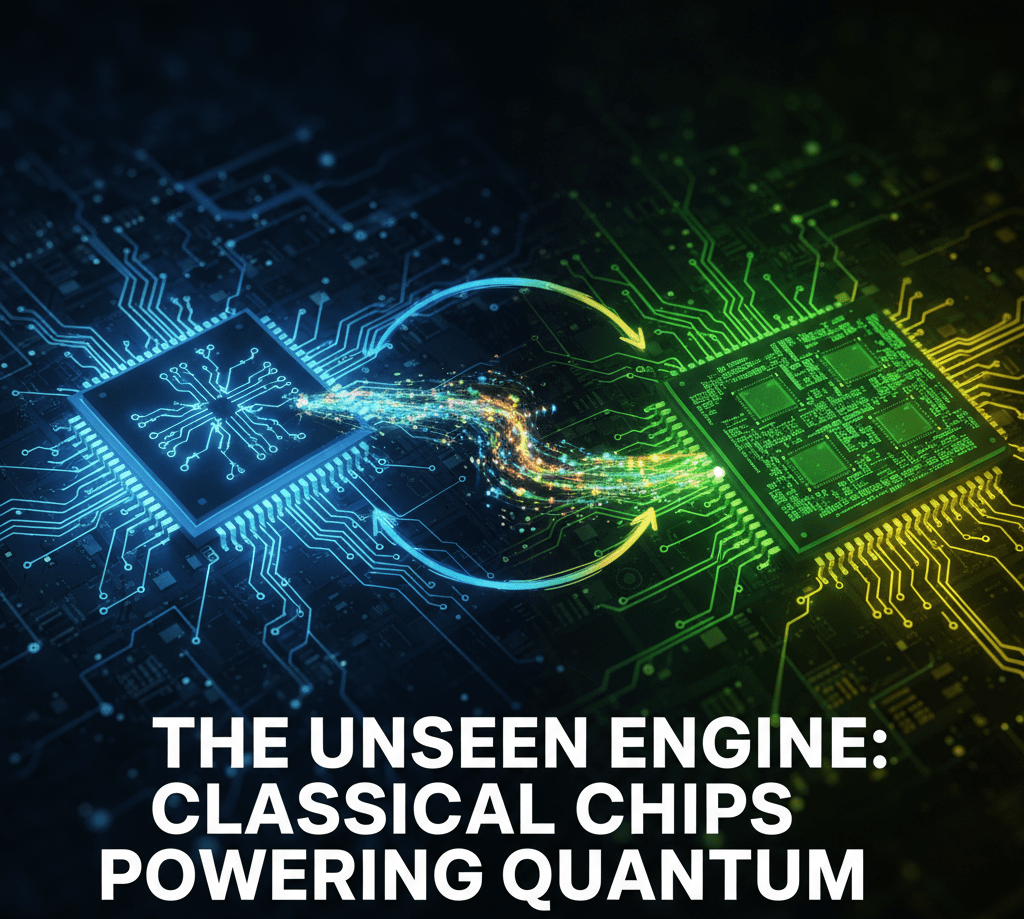
The Unseen Engine: How Classical Chips are Quietly Powering the Quantum Revolution
IBM’s recent milestone using off-the-shelf AMD hardware reveals a critical truth: the race for quantum supremacy is as much about high-speed classical engineering as it is about exotic physics. This hybrid approach is not just accelerating the quantum roadmap; it’s forging a new class of technology that could soon benefit industries far beyond computing. In
-

Quantum Leap: How Europe’s Tech Sovereignty Hinges on Quantum Computing and AI in 2025
The year 2025 stands as a pivotal moment for Europe. As the global technological landscape continues its relentless march forward, dominated by the transformative powers of quantum computing and artificial intelligence (AI), the continent faces a dual imperative: to innovate at an unprecedented pace while simultaneously safeguarding its values, citizens, and industries. Europe’s ambition for
-

Exploring Paradise: How Drone Swarms Could Revolutionize French Polynesia’s Vast Horizons
French Polynesia comprises 118 islands across five archipelagos, presenting unique challenges due to its vast geographic dispersion. The Society Islands are the hub for economic activity and monitoring, while the Tuamotu atolls are crucial for pearl farming. Drone swarm technology is identified as essential for environmental monitoring, drug interdiction, and emergency response, creating significant market…
-

Revolutionizing Nuclear Compliance: Case Studies Highlighting the Need for AI Solutions
The nuclear industry faces significant compliance and safety challenges due to reliance on manual processes and outdated systems. This post emphasizes the need for AI-powered compliance platforms to automate checks, track regulatory changes, provide real-time risk assessments, and centralize data management, ultimately enhancing safety and operational efficiency.
-

Challenges and Advances in Magnetic Fusion Technology
Creating magnetic fusion, a process that has the potential to revolutionize energy production, is one of the most challenging engineering feats. The concept of magnetic fusion involves harnessing the energy produced by nuclear fusion reactions. The ultimate goal is to generate a nearly limitless and clean source of energy. However, achieving this goal has proven
 IAORA42